
The Sports Complex & the Destination District Partnership
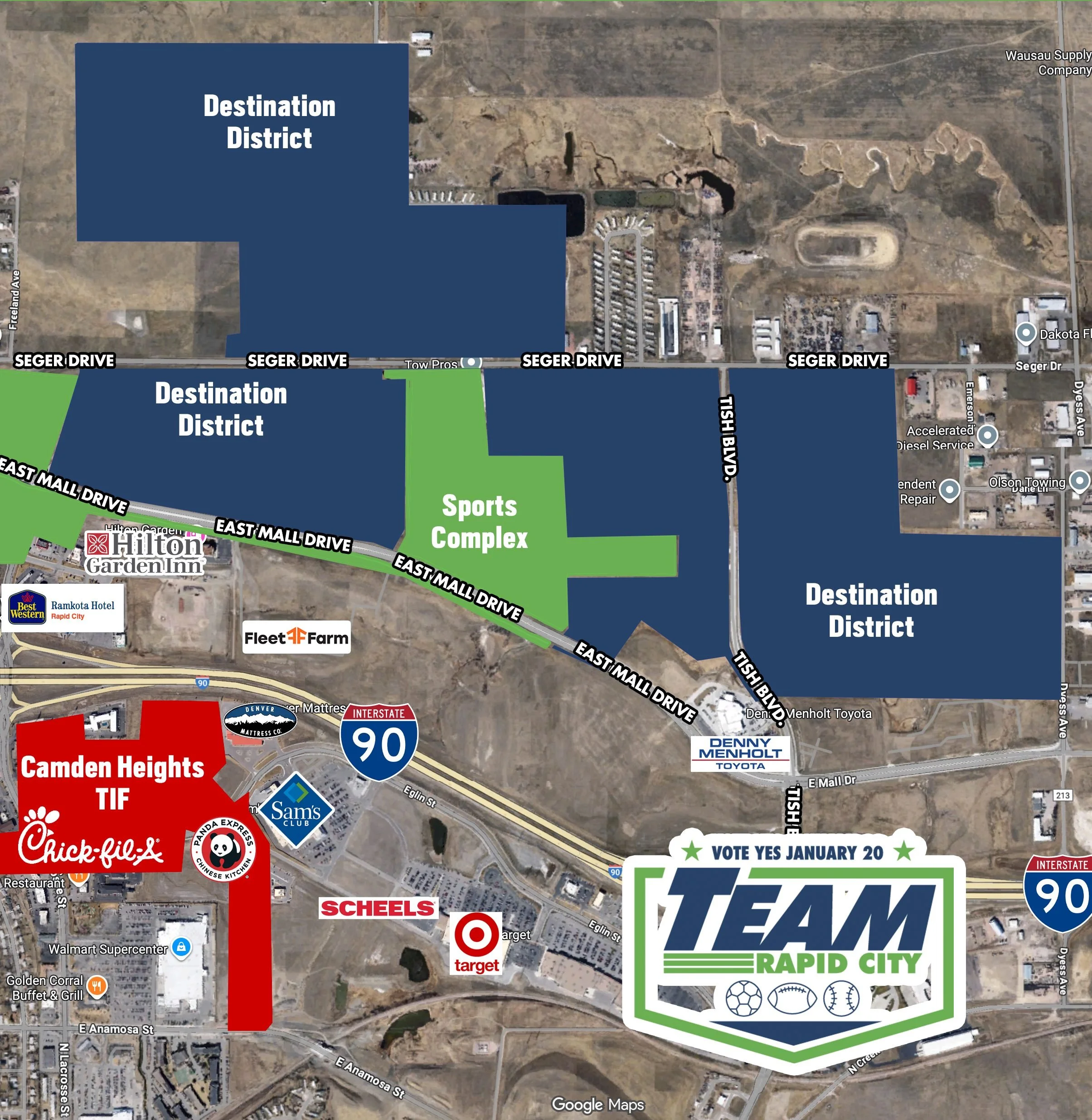
At a recent City Council meeting, Domico Rodriguez from Visit Rapid City and the Rapid City Sports Commission stood up and said something that’s worth paying attention to.
The Destination District isn’t some side project. It’s directly tied to the success of the indoor sports complex and to how Rapid City grows from here.
A lot of the conversation around the Destination District, sometimes called Liberty Land, has gotten tangled up in labels and assumptions. Domico cut through that pretty quickly. This isn’t an amusement park. If you’ve ever been to a place like Downtown Disney, that’s a closer comparison. Restaurants. Shops. Places to hang out. Entertainment that’s open to everyone, not something you need a ticket to enter.
And it sits right across the street from the sports complex.
That part matters more than people realize. When Rapid City competes to host tournaments or multi-day sporting events, the building itself is only part of the equation. Teams, families, and spectators want places to eat, walk, and spend time between games. They want things to do without getting back in their cars and driving across town. The Destination District helps solve that.
Domico also talked about something less flashy but probably more important in the long run. Infrastructure.
If you’ve driven Tish Boulevard, you know exactly what he was talking about. It’s narrow. It runs between industrial properties. It’s not the kind of road you’d expect to funnel hundreds or thousands of people in and out of a regional sports facility.
Completing and improving Tish Boulevard is baked into the Destination District TIF. Without it, there’s no real plan or funding source to fix that road anytime soon. And whether the Destination District moves forward or not, that infrastructure problem doesn’t just go away. It gets pushed down the road, usually at a higher cost.
Parking came up too, and for good reason. Anyone who’s been to a big event at the sports complex knows parking can get tight fast. Building massive parking lots just to cover peak demand a few weekends a year isn’t smart or cheap. Shared parking between the sports complex and the Destination District lets the city handle big events without wasting money on empty asphalt most of the year.
There’s also the bigger picture that often gets lost in the noise. Sports tourism is real economic activity. Those teams stay in hotels. They eat at local restaurants. They spend money all over town. The Destination District adds to that by creating a place people actually want to stay and spend time, not just show up and leave.
One thing Domico emphasized was the timing. Rapid City is at a point where the choices made now will shape what the city looks like for decades. Tax Increment Financing is one of the few tools cities have to get infrastructure built without putting the bill on existing residents. If the development doesn’t create new value, there’s no money to pay anything back. If it does, the city gets roads, utilities, and long-term tax base it didn’t have before.
The January 20 vote isn’t about being “for” or “against” growth in some abstract way. Growth is already happening. The real question is whether Rapid City handles it intentionally or lets infrastructure, traffic, and costs pile up until there are fewer good options left.
Domico’s ask was pretty simple. Learn the facts. Ask questions. Make an informed decision.
That’s reasonable. And it’s worth doing.
